
How Much Exercise Does an Indoor Cat Need? Age, Weight and Playtime Guide
Published: August 26, 2026
Indoor cats need daily exercise to maintain a healthy weight, reduce boredom and express natural hunting behaviors. But how much exercise does an indoor cat need?
Most healthy adult cats benefit from 20 to 30 minutes of active play per day, divided into two or more short sessions. Kittens often need more, while senior or overweight cats may need shorter, gentler sessions.
The right amount depends on your cat’s age, weight, health and energy level.
How Much Exercise Does a Cat Need by Age?
Cats usually prefer short bursts of activity rather than one long workout.
| Cat’s age | Recommended daily exercise |
|---|---|
| Kittens under 1 year | 40–60 minutes in short sessions |
| Adult cats aged 1–7 | 20–30 minutes |
| Mature cats aged 7–10 | 15–25 minutes |
| Senior cats aged 10+ | 10–20 minutes of gentle activity |
These numbers are general guidelines. An energetic senior cat may play more than a calm young adult.
Kittens
Kittens have high energy levels and need frequent opportunities to run, climb, chase and pounce. Offer several five- to 10-minute play sessions throughout the day using wand toys, balls, tunnels and climbing structures.
Adult Cats
Healthy adult cats generally need at least two active play sessions each day. Games that imitate hunting—stalking, chasing and catching—are especially effective.
Senior Cats
Senior cats still need daily movement, but their exercise may need to be lower impact. Try slow-moving wand toys, food puzzles and short walks around the home. Avoid encouraging repeated high jumps if your cat has stiffness or reduced mobility.
How Much Exercise Does an Overweight Cat Need?
An overweight indoor cat should exercise regularly, but activity should increase gradually.
Start with five to 10 minutes of play twice a day. Move toys along the floor rather than encouraging difficult jumps, and increase the session length as your cat becomes fitter.
Good exercises for overweight cats include:
- Chasing a wand toy
- Walking between food stations
- Using puzzle feeders
- Fetching lightweight toys
- Climbing low, stable platforms
Exercise can support weight loss, but portion control is equally important. Do not reduce your cat’s food dramatically without veterinary advice, as rapid weight loss can be dangerous.
A cat’s ideal weight also depends on breed and body size. Body condition—the amount of fat covering the ribs, waist and abdomen—is usually more useful than weight alone.
Best Indoor Cat Exercise Ideas
The best indoor cat exercise activates both the body and the brain.
Interactive Wand Toys
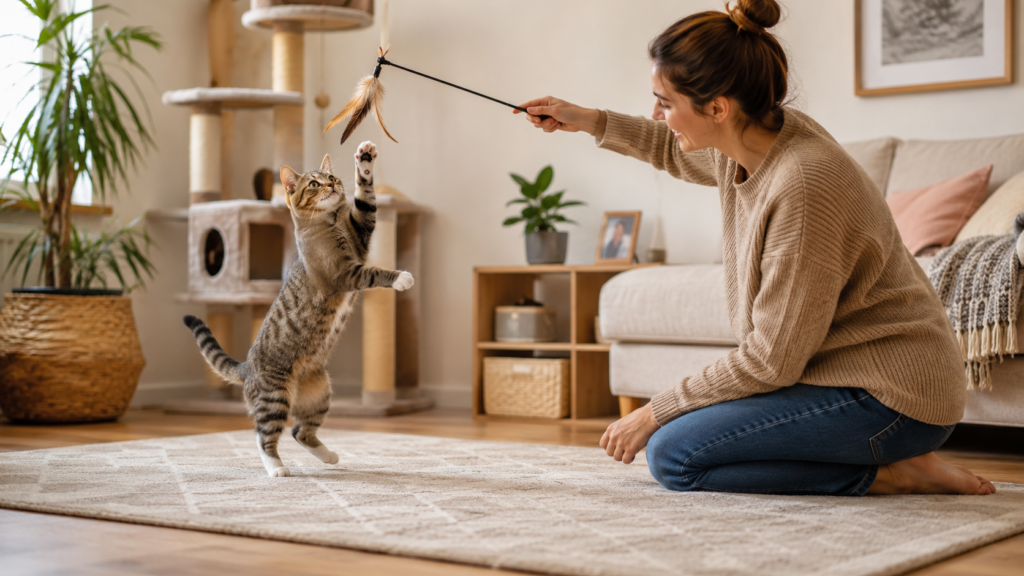
Move the toy like prey by letting it hide, pause and change direction. Allow your cat to catch it at the end of the game.
Puzzle Feeders
Puzzle feeders encourage cats to move and problem-solve for food. Use part of your cat’s normal daily meal rather than adding extra calories.
Cat Trees and Shelves
Vertical spaces encourage climbing, stretching and exploration. Make sure all climbing furniture is secure.
Balls, Tunnels and Boxes
Lightweight balls, tunnels and cardboard boxes provide inexpensive opportunities for chasing, hiding and pouncing.
Indoor Fetch
Some cats enjoy chasing and returning small toys. Toss them along a clear hallway for a simple burst of exercise.
Rotate toys every few days to keep them interesting. String and feather toys should be stored safely after supervised play.
A Simple Daily Indoor Cat Exercise Routine
A daily routine can make indoor cat exercise easier:
Morning: Five to 10 minutes of active play before breakfast
Afternoon: Puzzle feeder or independent toy
Evening: Ten to 15 minutes of chasing, climbing or fetch
Cats are often most active in the morning and evening, so these are usually the best times for play.
Watch your cat’s behavior during exercise. Stop if your cat begins limping, panting heavily or showing signs of pain. A sudden loss of interest in play should be discussed with a veterinarian.
Final Answer: How Much Exercise Does an Indoor Cat Need?
Most healthy adult indoor cats need 20 to 30 minutes of exercise each day, divided into short play sessions. Kittens may need 40 to 60 minutes, while senior or overweight cats may do better with gentler sessions lasting five to 10 minutes at a time.
The best indoor cat exercise routine is one that matches your cat’s age, weight, health and personality—and is enjoyable enough to repeat every day.