

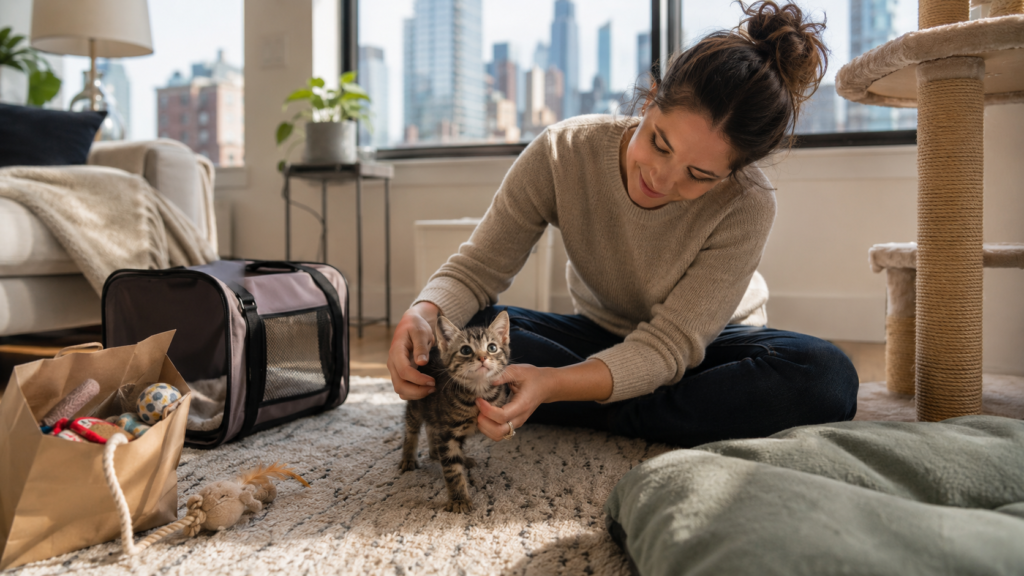
Tips for Adopting a New Cat in NYC in 2026
Published: August 10, 2026
Bringing home a new cat is exciting anywhere, but adopting a cat in New York City comes with a few uniquely urban considerations.
Small apartments, open windows, elevators, noisy hallways, roommates, radiators, and the occasional fire escape can all affect how quickly a new cat settles in. Whether you’re adopting a kitten, an adult cat, or a senior, a little preparation can make those first few weeks much easier for both of you.
Here are some of our favorite tips for adopting a new cat in NYC in 2026.
1. Cat-Proof Your NYC Apartment Before Adoption Day
Before your new cat comes home, take a look at your apartment from their perspective.
Secure window screens, block access to unsafe fire escapes, tuck away cords, remove toxic plants, and make sure cleaning products and medications are stored somewhere your cat cannot reach.
NYC apartments also tend to have plenty of tight hiding spaces. Check behind appliances, underneath cabinets, inside closets, and around radiators for places a nervous cat could squeeze into.
You don’t have to make your apartment perfect. You just want their first environment to feel safe and predictable.
2. Start Your New Cat in One Room
It can be tempting to give your new cat the run of the apartment immediately, especially if you live in a smaller NYC space.
Resist the urge.
A new home comes with unfamiliar smells, sounds, people, and routines. Starting your cat in one quiet room gives them a smaller world to understand before asking them to navigate the entire apartment.
Set up the room with:
- Food and fresh water
- A litter box
- A comfortable bed or blanket
- A scratching surface
- A few toys
- At least one safe hiding place
Let your cat decide when they are ready to explore more.
3. Expect Some Hiding
One of the most common worries for new cat parents is, “Why is my new cat hiding?”
In most cases, hiding during the first few days is completely normal.
Your cat has just experienced a major change. Even confident cats may spend time underneath a bed, inside a carrier, or tucked into a quiet corner while they adjust.
Avoid pulling them out unless they are somewhere unsafe. Instead, sit quietly nearby, talk softly, offer treats, and let them approach on their own terms.
Building trust with a cat is often about giving them the choice to interact.
4. Keep Their Routine Consistent
Cats tend to thrive on predictability.
Feed your new cat at roughly the same times every day, scoop the litter box regularly, and create a familiar rhythm around playtime and bedtime.
In a city as noisy and unpredictable as New York, consistency inside the home can be especially reassuring.
You might not be able to control the sirens outside your window or the neighbor moving furniture upstairs, but you can make your apartment feel dependable.
5. Ask What Food and Litter They Already Use
Adoption day might not be the best time to introduce a brand-new diet, new litter, new treats, and a completely different routine all at once.
Ask the rescue, shelter, foster, or previous caregiver what your cat has been eating and what type of litter they use.
Keeping those things familiar during the transition can help reduce stress. If you eventually want to change foods or litter, make the switch gradually once your cat is comfortable at home.
6. Find a NYC Vet Before You Need One
Don’t wait until something is wrong to start searching for a veterinarian.
Once you adopt your cat, find a vet near your apartment and schedule an introductory appointment. Keep your cat’s vaccination records, adoption paperwork, microchip information, and medical history somewhere easy to access.
It is also worth identifying your closest emergency veterinary hospital ahead of time.
You may never need it, but knowing where to go before an emergency happens can save valuable time.
7. Get Your Cat Comfortable With Their Carrier
For NYC cat parents, the carrier is especially important.
Trips to the vet may involve walking several blocks, taking a cab, riding the subway, or navigating a busy apartment lobby. You want the carrier to feel like a safe space rather than something that only appears before a stressful trip.
Leave it out in your apartment with the door open. Add a familiar blanket or treats and let your cat investigate it whenever they want.
The goal is for the carrier to become part of the furniture.
8. Think Vertically in a Small Apartment
Your cat does not necessarily need a huge apartment to be happy.
Cats care about usable territory, and vertical space can make even a studio feel much bigger.
Consider adding a cat tree, sturdy shelving, a window perch, or another elevated place where your cat can climb and observe their surroundings.
This is particularly helpful in smaller NYC apartments where floor space is limited.
9. Give Them Appropriate Places to Scratch
Scratching is normal cat behavior, not bad behavior.
Set up scratching surfaces before your new cat decides that your sofa is the best option available.
Some cats prefer tall vertical posts, while others like horizontal cardboard scratchers. Offering both early on can help you learn what your cat prefers.
Place scratchers near areas where your cat sleeps, plays, or spends a lot of time.
10. Be Extra Careful With Windows
One of our biggest pieces of advice for anyone adopting a cat in NYC is to take window safety seriously.
Never assume a standard window screen is strong enough to hold a cat leaning, climbing, or jumping against it.
Check that screens are secure and consider additional protection if your windows open widely or your cat has access to a fire escape.
NYC cats may be indoor cats, but a poorly secured window can quickly turn into an outdoor emergency.
11. Give Introductions Plenty of Time
Already have another cat?
Slow introductions are worth the patience.
Rather than immediately putting both cats together, begin by keeping them separated and allowing them to become familiar with each other’s scent. Gradually move toward visual introductions and short supervised interactions.
Some cats become friends quickly. Others need weeks.
The goal should not be to rush them into sharing a couch. It should be to help both cats feel safe in their home.
12. Plan for Cat Care Before Your First Trip
It is easy to focus so much on adoption day that you forget about what happens the first time you need to leave town.
Start thinking about your cat-care plan before you actually need it.
Cats generally do best when they can stay in their familiar home, which is why many NYC cat parents choose an in-home cat sitter instead of boarding.
Finding someone you trust ahead of time also means you are not scrambling for care right before a holiday, work trip, or weekend away.
Your New Cat Does Not Need to Adjust Overnight
Perhaps the most important new-cat tip is simply to be patient.
Some cats walk out of their carrier and immediately act like they own the apartment. Others need days or even weeks before their personality really starts to emerge.
Let your new cat set the pace.
With a safe home, consistent routine, plenty of enrichment, and a little patience, your NYC apartment can quickly start feeling like their home too.
Need a Cat Sitter in NYC?
Once your newest family member is settled in, Feline Tails provides cat-focused, in-home sitting throughout Manhattan, Brooklyn, and Astoria, Queens.
Whether you’re planning your first weekend away or simply want a trusted sitter your cat can get to know, finding care before you need it can make future travel much easier.