

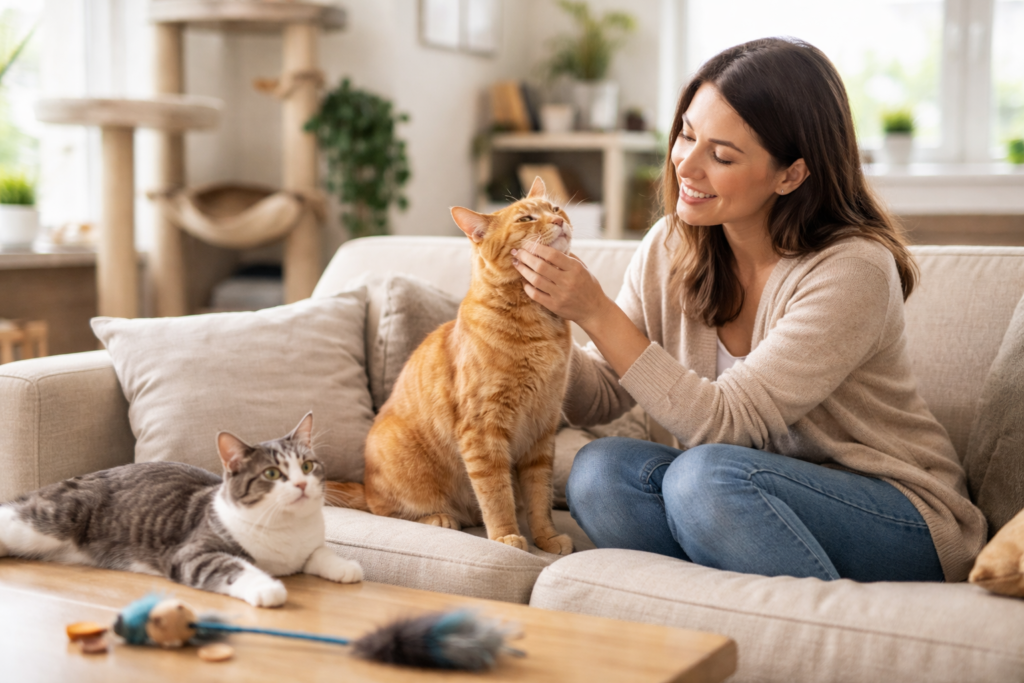
Debunking Cat Myths (Part 2): Understanding the Subtle Truths About Feline Behavior
Published: March 14, 2026
Cats are often misunderstood because their communication style is quiet, nuanced, and very different from dogs or humans. Over time, myths have shaped how people interpret normal feline behaviors — sometimes leading to unsafe environments or unmet emotional needs.
By looking a little deeper at the science and psychology behind these common beliefs, we can better support our cats’ wellbeing and strengthen our relationships with them.
🐾 Myth 1: Cats always land safely on their feet
Cats possess a remarkable righting reflex that allows them to twist their bodies mid-fall, but this ability is often overestimated.
Truth: Falls can still result in serious injuries and should never be considered harmless.
Mid-height falls can be particularly dangerous because cats don’t have enough time to fully position their bodies
Injuries may include jaw fractures, chest trauma, or internal bleeding
Window screens and balconies are common risk areas for indoor cats
🐾 Myth 2: Purring means a cat is happy
While purring is commonly heard during relaxed moments, it serves multiple emotional and physiological purposes.
Truth: Cats often purr as a way to calm themselves during stress or discomfort.
Some cats purr during veterinary visits or when recovering from injury
Mother cats purr during labor and when nursing kittens
The vibration may play a role in emotional regulation and coping
🐾 Myth 3: Cats don’t form strong emotional bonds
The stereotype of cats as aloof or indifferent overlooks growing research on feline attachment and social preferences.
Truth: Cats can develop meaningful emotional connections with both humans and other animals.
They may follow preferred people from room to room
Behavioral changes can occur after the loss of a companion
Greeting rituals and “head bunting” are signs of social bonding
🐾 Myth 4: Indoor cats are automatically low-maintenance
Indoor living reduces exposure to outdoor hazards but does not eliminate behavioral needs rooted in instinct.
Truth: Mental stimulation and environmental enrichment are essential for indoor feline health.
Hunting instincts remain active even without real prey
Lack of stimulation can lead to nighttime hyperactivity or destructive habits
Vertical space, puzzle feeders, and interactive play help reduce stress
🐾 Myth 5: Cats act out of spite
Human emotions are often projected onto animal behavior, leading to misunderstandings about motivation.
Truth: Most unwanted behaviors are responses to stress, instinct, or environmental change — not revenge.
Knocking objects down can be exploratory or prey-driven
Litter box avoidance may signal medical issues or territory concerns
Attention-seeking behaviors often develop through learned reinforcement
🐾 Myth 6: Senior cats can’t change their personality
Age-related stereotypes can prevent owners from recognizing opportunities to improve quality of life.
Truth: With proper care and comfort, older cats can become more affectionate, confident, or playful.
Chronic pain such as arthritis can influence mood and sociability
Predictable routines help reduce anxiety in aging cats
Gentle play and accessible resting spaces encourage engagement
The Takeaway
When we move beyond myths and observe cats through a behavioral and scientific lens, their actions begin to make much more sense. Understanding these subtleties allows owners to create safer homes, respond appropriately to behavioral signals, and build deeper, more trusting relationships with their feline companions.