

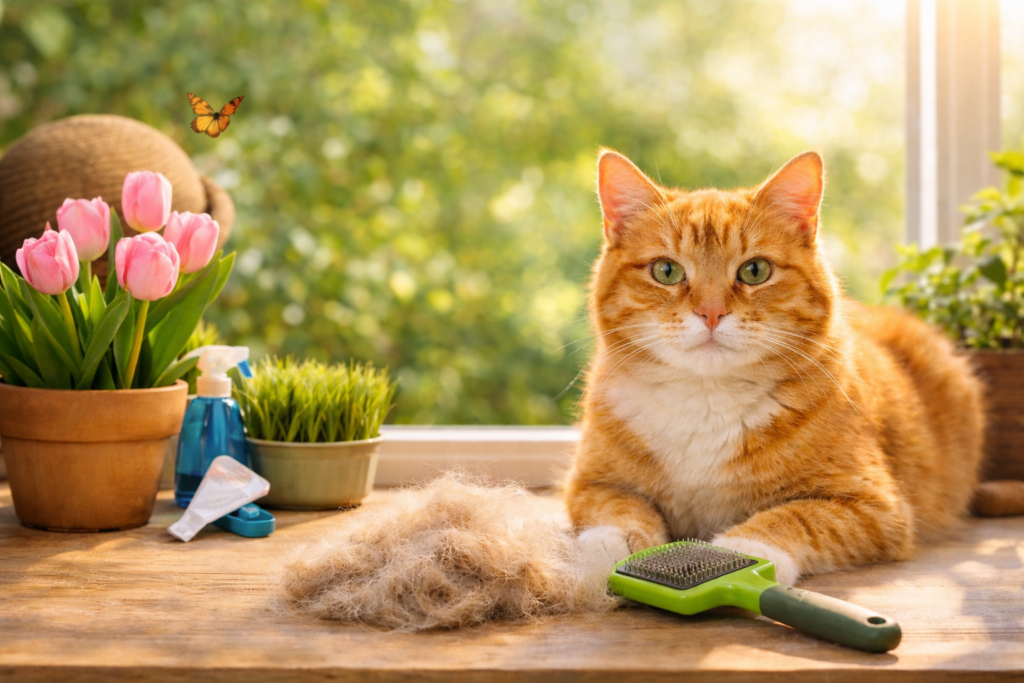
Spring Cat Questions Answered: Seasonal Shedding, Daylight Savings, Spring Plants, and More
Published: March 12, 2026
As winter fades and longer, brighter days arrive, spring brings noticeable changes — not just for humans, but for our cats too. From increased shedding to shifting routines and new seasonal hazards, many cat owners find themselves asking the same questions every year.
Cats are highly sensitive to environmental changes such as temperature, daylight length, and even subtle shifts in household activity. Understanding these seasonal transitions can help you support your cat’s physical health, emotional wellbeing, and daily comfort.
Here’s your complete guide to how spring affects your cat — and what you can do to help them stay happy, healthy, and thriving.
🌼 Why Is My Cat Shedding So Much Right Now?
Spring shedding is one of the most noticeable seasonal changes. As temperatures rise and daylight increases, cats naturally begin to lose their thick winter undercoats. This biological response helps regulate body temperature for warmer months ahead.
However, increased shedding can lead to more hairballs, extra cleaning for owners, and sometimes mild skin sensitivity.
How to manage spring shedding effectively:
-
Brush your cat more frequently — daily grooming can significantly reduce loose fur
-
Use grooming gloves or deshedding tools for cats that dislike brushes
-
Encourage hydration by refreshing water bowls or adding a pet fountain
-
Consider wet food or vet-approved supplements that support skin and coat health
-
Maintain regular vacuuming routines to reduce allergens in the home
If shedding seems excessive or is accompanied by scratching, patchy fur loss, or behavioral changes, consult your veterinarian to rule out allergies, parasites, or underlying medical concerns.
⏰ Did Daylight Saving Time Affect My Cat’s Routine?
Absolutely. Cats rely heavily on predictable routines for feeding, play, and sleep. Even a one-hour shift from Daylight Saving Time can temporarily confuse their internal body clocks.
You may notice behaviors such as:
-
Persistent early-morning wake-up calls
-
Increased vocalization around mealtimes
-
Restlessness at night
-
Short-term appetite pattern changes
Tips to help your cat adjust smoothly:
-
Gradually shift feeding schedules by 10–15 minutes each day
-
Keep evening wind-down routines consistent
-
Use timed feeders if early wake-ups become disruptive
-
Provide sunny lounging areas to help regulate circadian rhythms
Most cats adapt within one to two weeks, especially when their daily structure remains reassuringly consistent.
🌷 Are Spring Plants and Flowers Dangerous for Cats?
Spring is peak season for bringing fresh flowers indoors and starting gardening projects. Unfortunately, many popular seasonal plants are toxic to cats — even small exposures can cause serious illness.
High-risk spring plants include:
-
Lilies (extremely dangerous — ingestion or pollen exposure can cause kidney failure)
-
Tulips
-
Daffodils
-
Hyacinths
-
Crocuses
-
Certain bulb plants
Safer plant choices for cat-friendly homes:
-
Cat grass or wheatgrass
-
Spider plants
-
Areca or parlor palms
-
Boston ferns
If you suspect your cat has chewed or ingested a toxic plant, seek veterinary care immediately. Early treatment can be lifesaving.
🐾 Why Does My Cat Suddenly Have More Energy in Spring?
Longer daylight hours naturally increase feline alertness and activity levels. In the wild, spring represents a time of hunting opportunity and environmental stimulation, and domestic cats often mirror this instinctive response.
You may observe:
-
Sudden bursts of zoomies
-
More window watching or “bird TV” fascination
-
Increased play aggression or attention-seeking
-
Nighttime restlessness
Healthy outlets for spring energy:
-
Introduce new interactive toys or rotate existing ones
-
Add vertical enrichment such as cat trees or wall shelves
-
Create window perches for safe outdoor observation
-
Schedule structured play sessions to mimic hunting cycles
Providing mental and physical stimulation helps prevent boredom-related behaviors like scratching furniture or nighttime disruptions.
🦟 Do Indoor Cats Really Need Flea Prevention in Spring?
Many owners assume indoor cats are safe from parasites, but fleas can easily enter homes through clothing, other pets, or open windows. Warmer temperatures dramatically increase flea reproduction rates, making spring the ideal time for preventive care.
Simple parasite prevention strategies:
-
Discuss seasonal flea and tick protection with your veterinarian
-
Wash pet bedding and soft furnishings regularly
-
Inspect your cat’s coat during grooming sessions
-
Keep living spaces clean and well-ventilated
-
Monitor for subtle signs such as over-grooming or small dark specks in fur
Preventive action early in the season can save significant stress and treatment costs later.
🧼 Should I Change My Cat’s Grooming or Cleaning Routine for Spring?
Spring is also an ideal time for a household “reset,” and your cat’s care routine can benefit from small seasonal updates. Increased shedding and activity can mean more dander, tracked litter, and general mess.
Helpful spring refresh ideas:
-
Deep clean litter boxes and replace worn scoops or mats
-
Wash or rotate bedding and favorite blankets
-
Refresh scratching posts or add new textures
-
Evaluate air quality and consider HEPA filtration for allergy reduction
A cleaner environment supports both feline respiratory health and overall comfort.
🌞 Final Thoughts: Helping Your Cat Thrive This Spring
Seasonal transitions can feel subtle to humans but are deeply influential for cats. By recognizing how spring affects shedding cycles, activity levels, environmental risks, and parasite exposure, you can make proactive adjustments that support your cat’s wellbeing.
Small actions — like more frequent grooming, consistent routines, safer plant choices, and enhanced enrichment — can create a smoother and more enjoyable transition into warmer months.
Spring ultimately offers wonderful opportunities for renewed playfulness, sunny relaxation, and fresh routines. With thoughtful preparation, you and your cat can fully enjoy the brighter, lighter season ahead.
Next step for cat owners:
Consider scheduling a spring wellness check, updating grooming supplies, and refreshing enrichment setups to match your cat’s changing seasonal needs.
Your cat may not track the calendar — but their instincts always know when spring has arrived.