
How to Bring the “Forest and Field” Into Your NYC Apartment (and Keep Your Cat Truly Happy)
Written By Stephen Quandt, CFTBS, Feline Behaviorist, in partnership with Feline Tails
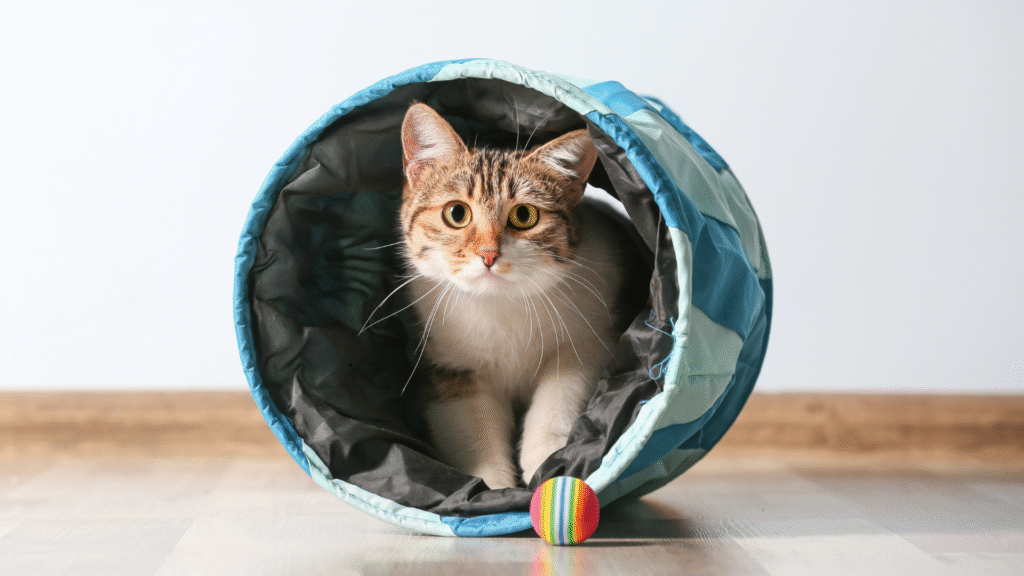
Feline Tails is proud to partner with Stephen Quandt to bring expert cat enrichment advice to NYC cat owners. Together, let’s explore how to enrich your cat’s life, even in the smallest New York City apartment.
Cats didn’t evolve in 400-square-foot studios. Their story began across the Fertile Crescent—North Africa, the Middle East, and the vast open landscapes that came with it. In nature, a cat could claw a hundred different tree trunks and never hit the same one twice, and leave scent marks across miles without repeating a spot.
A Manhattan apartment is… not that.
And when we shrink a cat’s territory, some cats respond with frustration or boredom. That can show up as “drive-by ankle attacks,” couch-destroying claw sessions, or litter box issues. But the good news? We can fix this by recreating the richness of a natural environment inside your home.
Think of it as giving your cat their own indoor ecosystem—a buffet of excitement, problem-solving, exercise, comfort, and novelty. Below are my top tools and strategies for transforming your NYC space into something your cat will absolutely thrive in.
#10: A Webcam for Behavior Insight
A camera might not seem like enrichment, but it gives you valuable visibility into your cat’s day. Are they anxious? Bored? Sleeping peacefully? A budget-friendly option like the Eufy Camera offers motion detection, low-light recording, two-way audio, and local SD storage—no subscription needed.
#9: Multiple Scratching Options
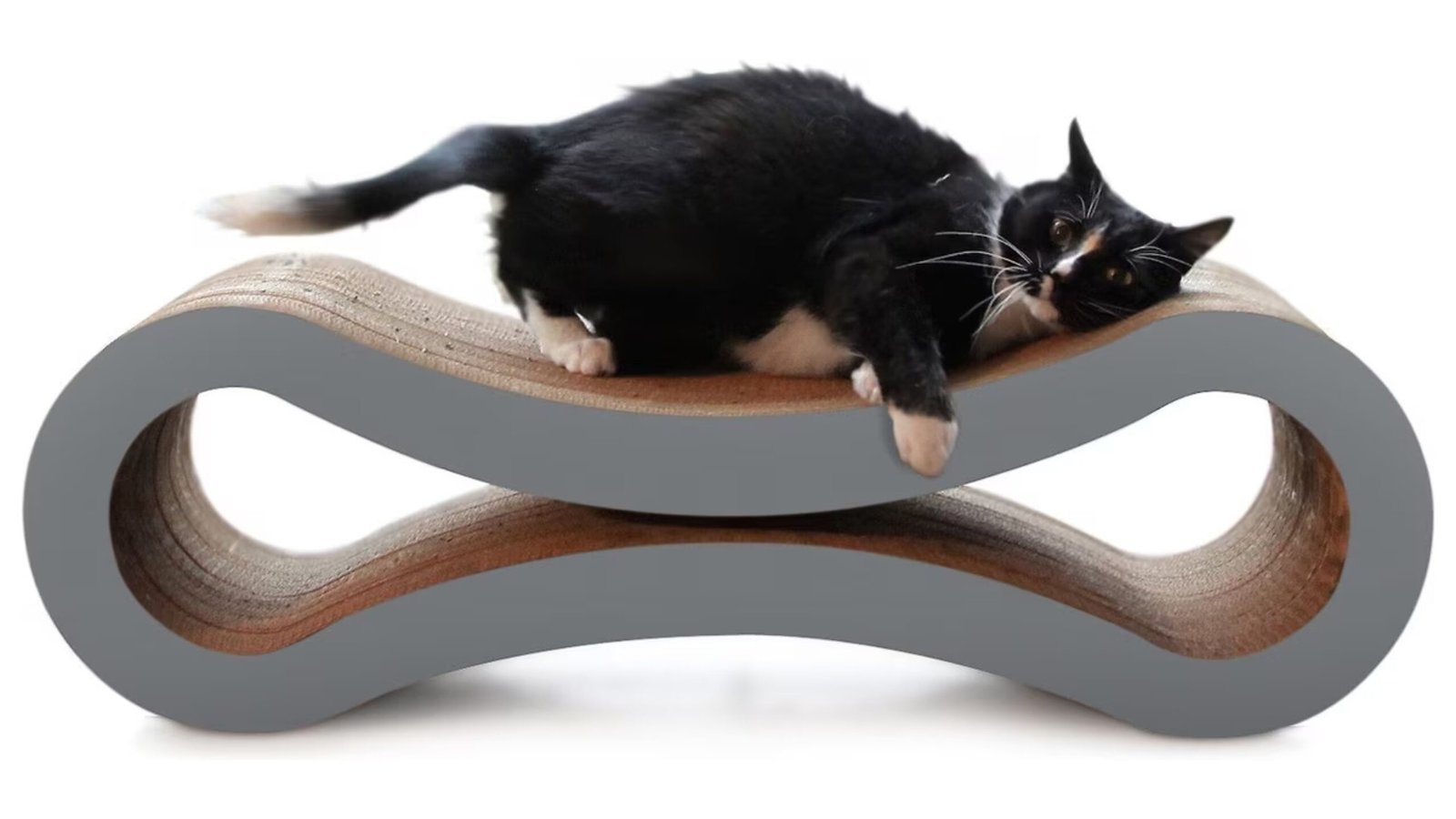
Cats must scratch things in order to sharpen their nails, stretch muscles, tendons and ligaments, as well as deposit territory-marking scents located in glands in their paws. Bear in mind that while vertical posts are the most popular some cats prefer horizontal scratchers, and others like angled ones. Material also affects preferences and includes sisal rope fiber, cardboard, carpet and soft wood.
-
- The Smartcat Ultimate Scratching Post is the perfect vertical post.
-
- This curvy Petfusion Ultimate Scratcher made of dense cardboard is perfect for cats who want alternative angles.
-
- And this is an example of a harder to find soft wood scratcher for the cat who really likes trees!
#8: Wall-Mounted Cat Shelves
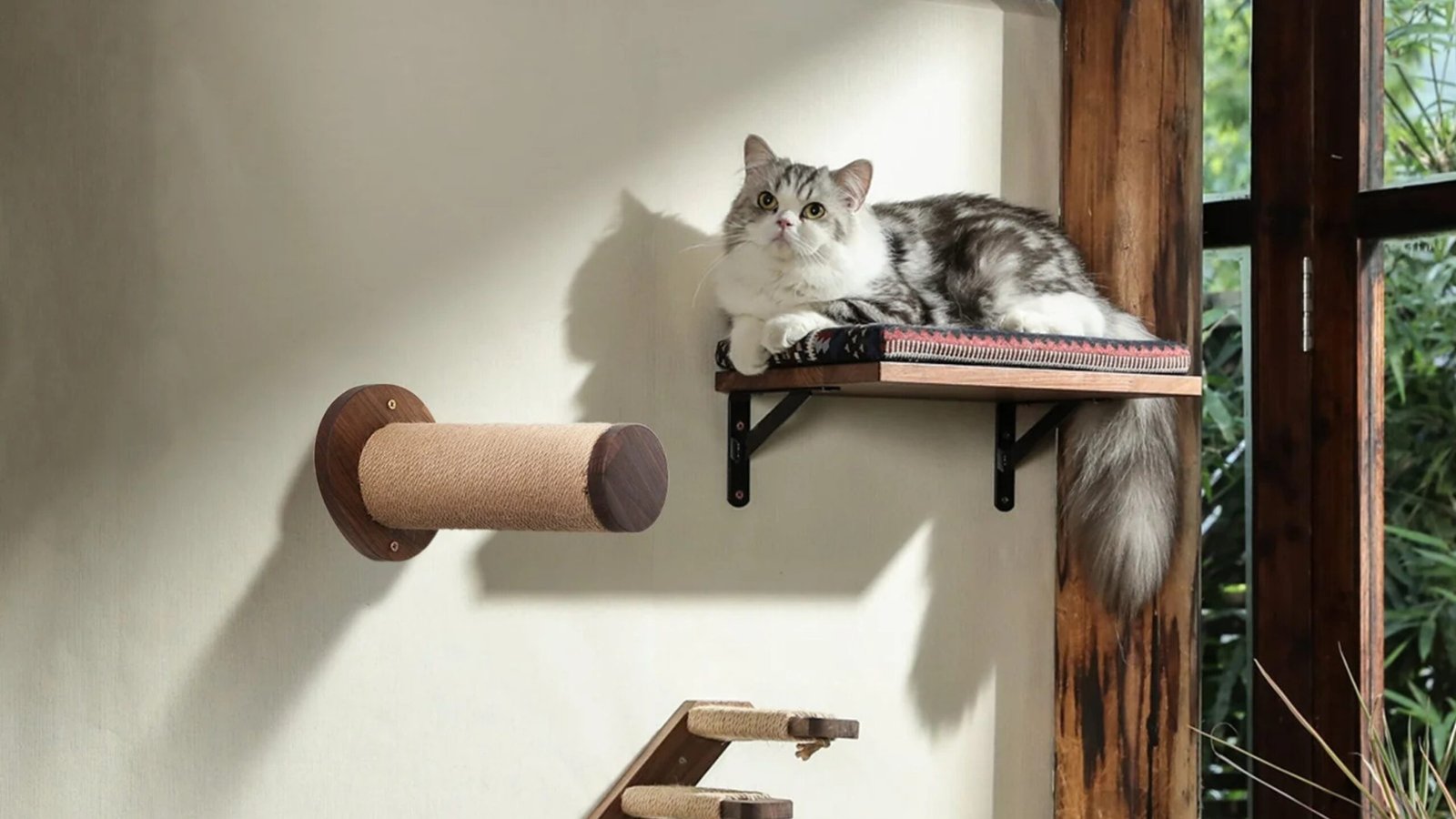
Cats express status through height and giving vertical territory expands your apartment into 3 dimensions and can go a long way to turning your modestly sized home into a cat mansion. Plus they make good conversation pieces! FUKUMARU Cat Wall Shelves are excellent examples.
#7: Cat Grass
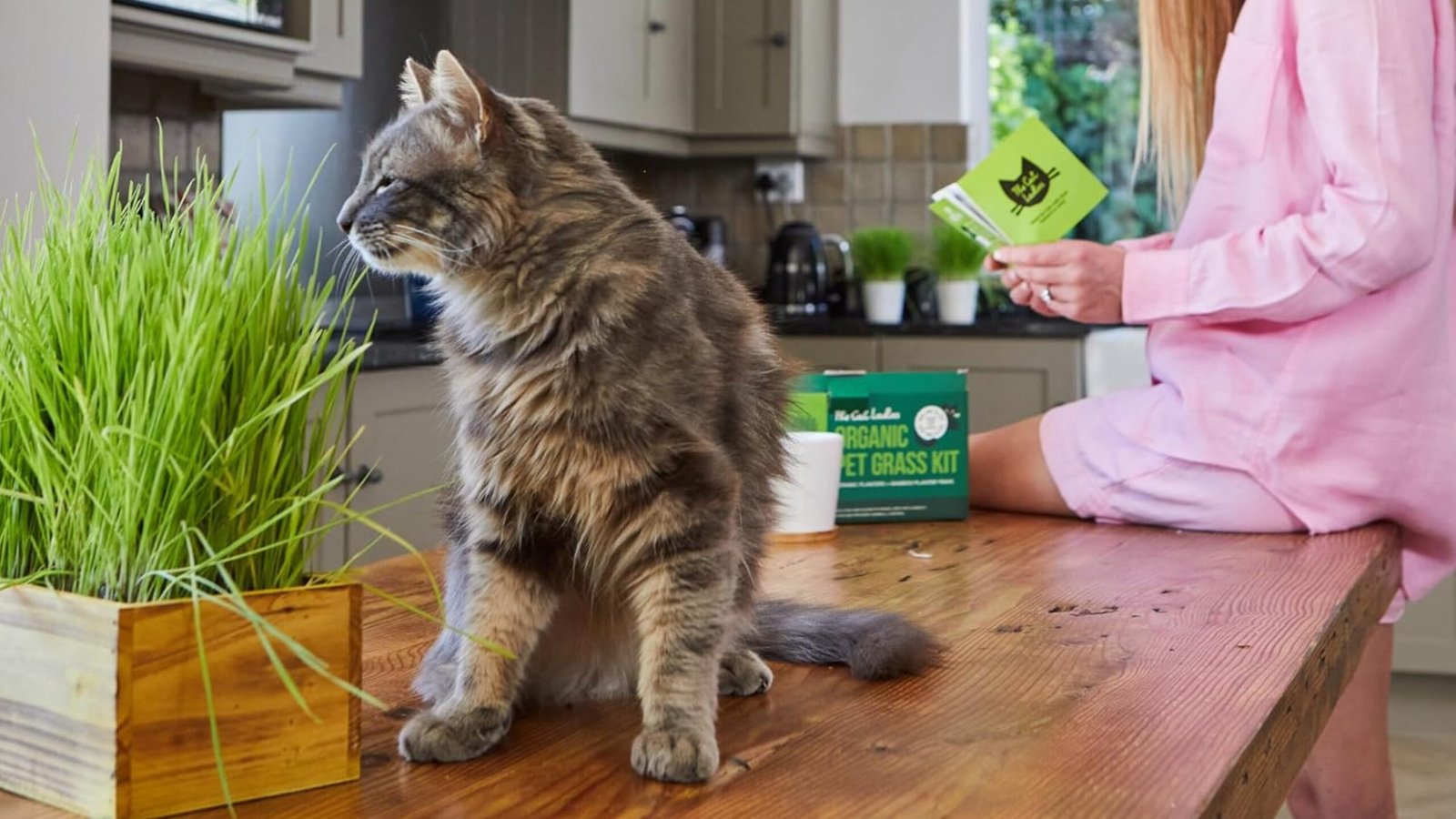
This is literally about bringing the “field” inside and giving your cat something tasty to munch on! It also may help direct your cat away from other plants, and the fiber may help with intestinal motility, and hairballs. There are lots of cat grass options on the market but I love this one by The Cat Ladies Grass Kit and so do my cats including my blind-from-birth girl, Jenny (JennyTheBlindCat on ig and fb) and her step sister Cricket. And it’s organic.
#6: A Cat Tree (that fits in a small apartment)
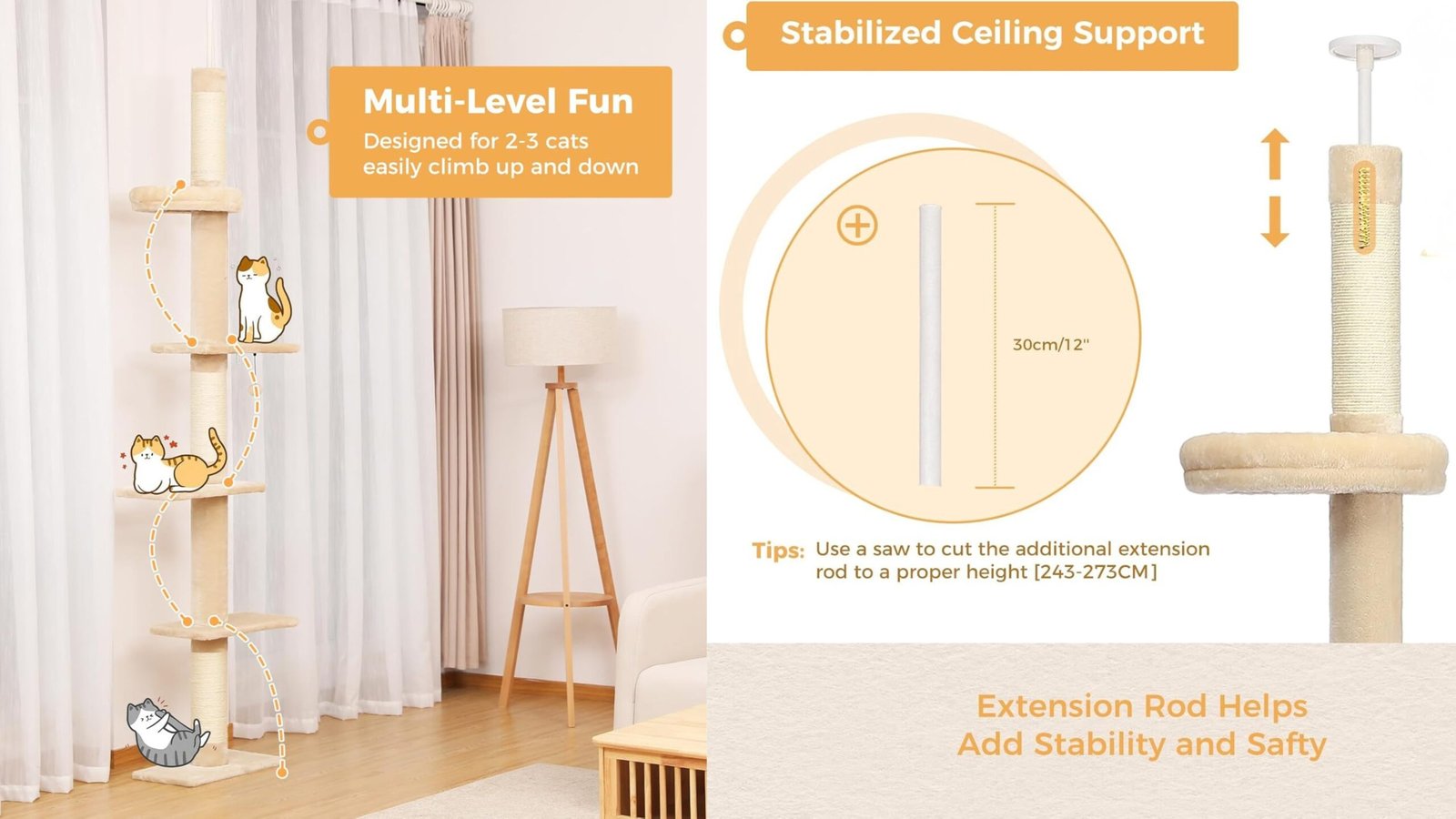
You know the phrase “location, location, location!” For cats it’s “height, height, height!” Height confers status and confidence and as mentioned in #8 above it expands the size of your apartment in three dimensions. In connection with shelving you have created a gymnasium for your cat. This is especially good in multi-cat homes but all apartments should have a good tree, ideally one per cat.
So, how do you fit these in your apartment? Most trees get their stability from big, fat heavy bases that take up room (plus you have to put them together). There is another type of tree that is thin and lithe and gets its support from a pressure plate that squeezes against the ceiling or a wall. And still others hang from doors. And assembly is a breeze, most are modular and just slip together. Here are some recommendations:
#5: Window Perches
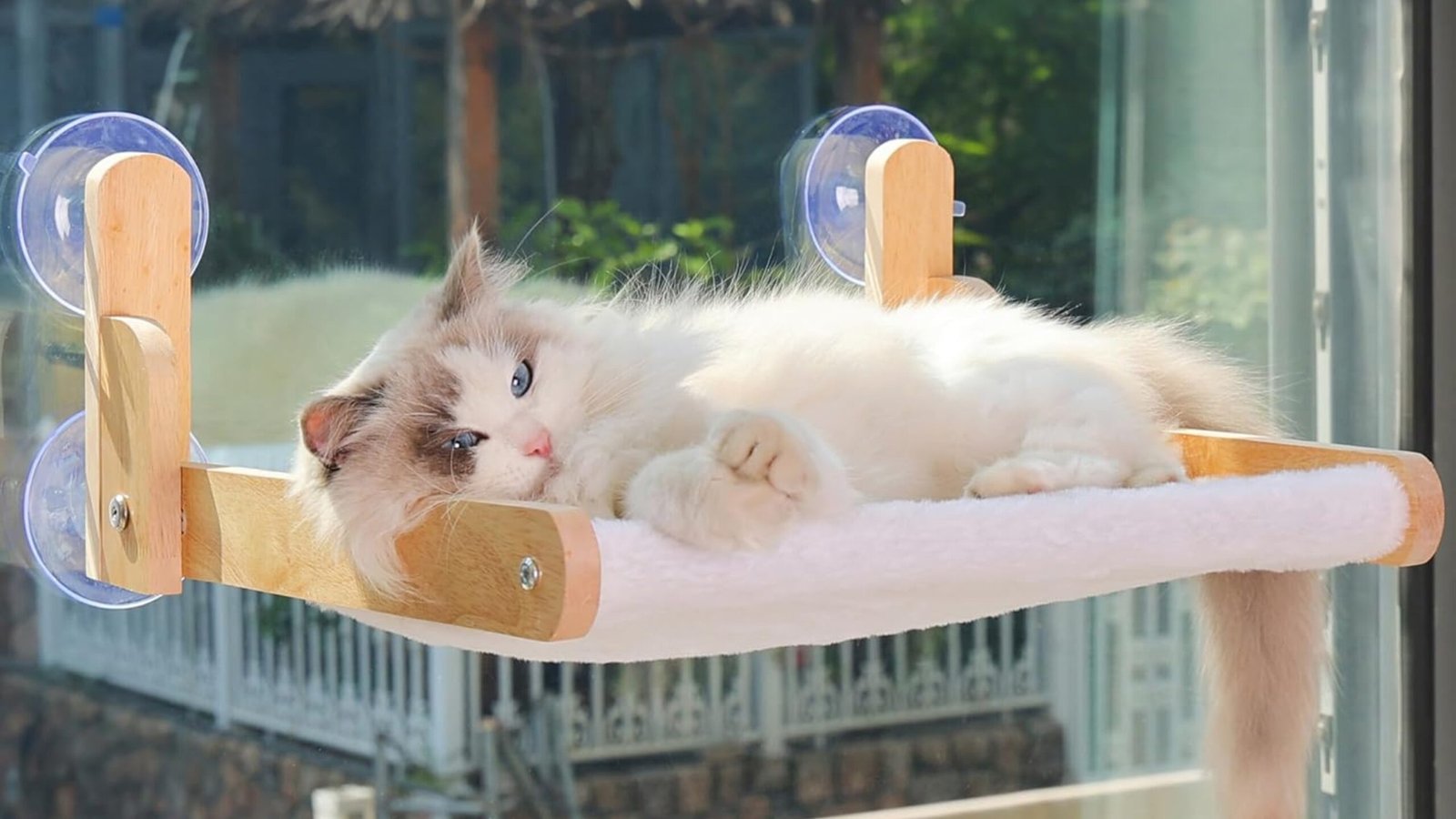
Combine these with shelves and trees and you have now created the perfect environment for your cat! Your cat gets a view, and a breeze, it’s like they’re outside!
#4: Water Fountains
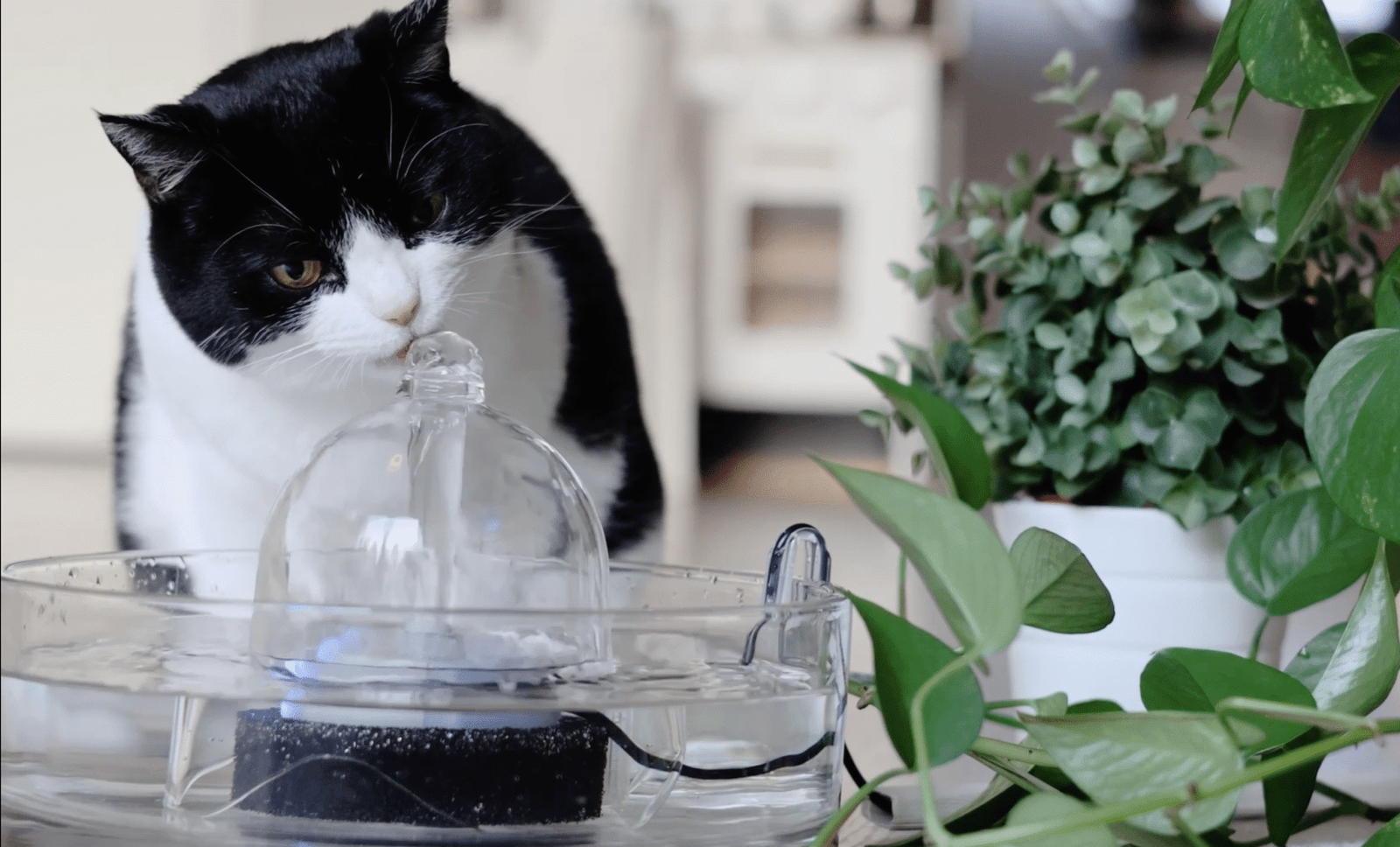
What indoor forest isn’t complete without a babbling brook? Cats like moving sources of water and in nature that means water that isn’t stagnant and as a result, biologically safer. And it’s more fun and getting cats to drink a lot of water is good for long term kidney health.
One of my favorites is the Brook Fountain, all glass, variable flow and incredibly easy to clean and super quiet. It’s even dishwasher safe! Cordless is a great and fairly new way to go, allowing you to put the fountain wherever you want. One of the best is by Petlibro.
#3: Puzzle Feeders
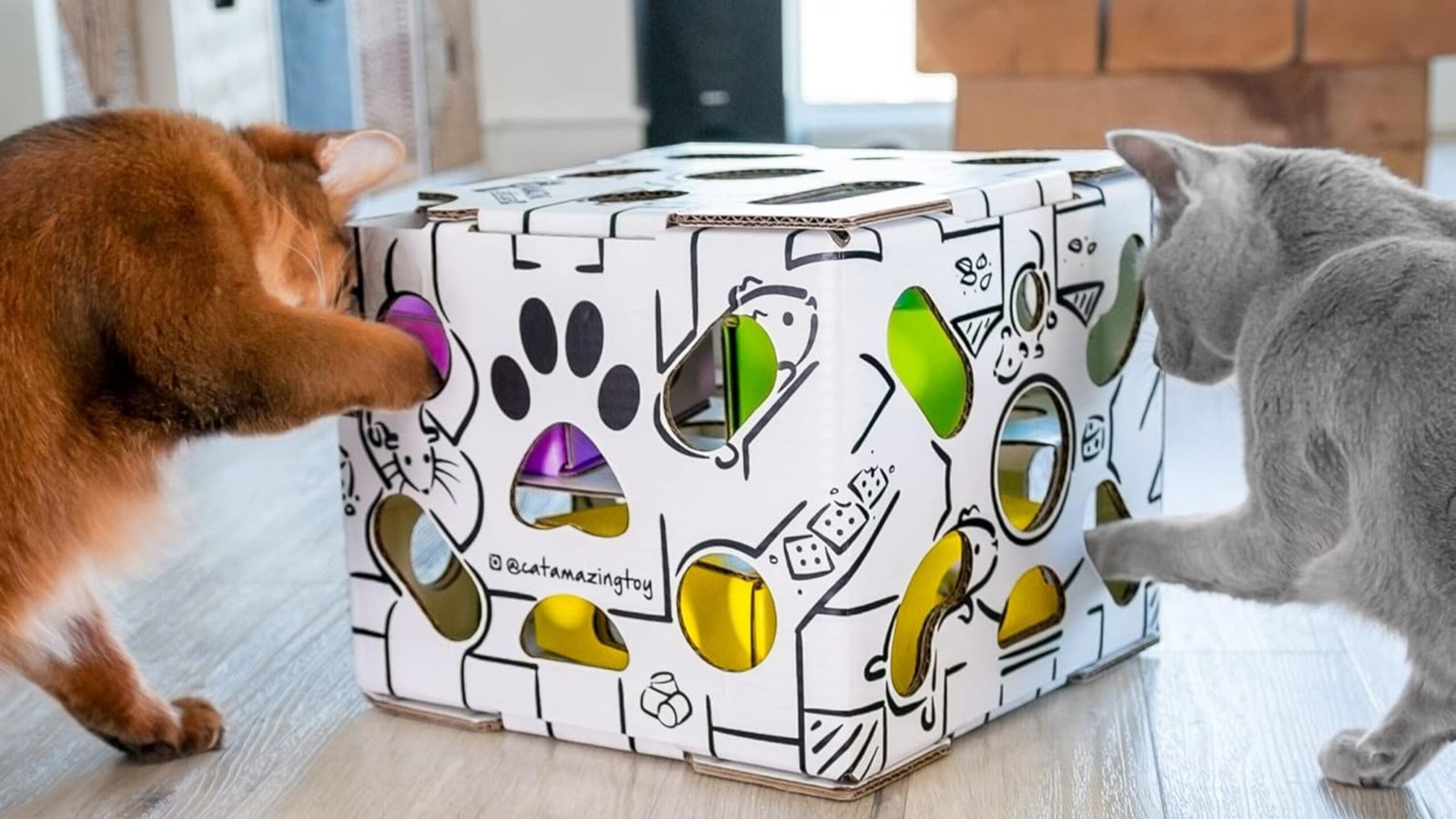
Cats hunt for a living and their paycheck is food. They aren’t grazers by nature like sheep and goats and cows. They have to problem-solve for their “money.” Most of us just set the food down for them and walk away. The result, a bored, and maybe, fat cat! Engage your cat’s natural warrior mind by hiding treats around the apartment. Teach them that if they follow the laser pointer, it will lead to a reward and they can finally catch that dot! And give them puzzle feeders to really make them work for that snack!
Cat Amazing makes puzzle feeders that have so exhausted some of my client’s cats that they fall asleep next to them after having a treat-filled workout. Here’s what we suggest:
-
- Cat Amazing Sliders Large Puzzle feeder
-
- Large Puzzle Feeder assembly instructions (video), Video in action!
#2: The Cycle of Predation
Cats are built for a natural cycle: hunt → eat → sleep. In the wild, finishing a “predation sequence” makes them tired so they can conserve calories — that’s why all cat species sleep more than they’re awake.
You can use this to your advantage at home. Play mimics hunting, so give your cat a play session followed by a treat or meal. This taps into their instinctive routine and leads to a calmer, sleepier cat.
For nighttime peace, try a good play session and a full meal about an hour before you go to bed. And remember, wild cats eat many small meals (8–12 a day), so your cat may behave better with 3–4 smaller meals instead of one big one. A little instinct-based routine goes a long way.
#1: Ritualized Enrichment
Cats behave a lot like people at slot machines. In casinos, players keep pulling the lever because rewards come randomly — just often enough to keep them trying. This “slot machine effect” happens in our homes too. When cats poke, meow, or tap us for attention (“I want fun! I want a snack! I want something!”), they’re doing it because they might get rewarded. And when we finally give in, we accidentally teach them the exact behavior that gets results: persistent pestering.
You can break this cycle by offering ritualized enrichment — scheduled, predictable moments of joy. Four to five times a day, at the same time everyday, give your cat 5–10 minutes of something they truly love (play, petting, grooming), and follow it with a small snack. Cats thrive on routine, and once they know these experiences will happen regularly, their need to nag you fades because their internal clock does the work.
Keep these sessions short; consistency matters far more than duration. For even better results, do them in the same spot each time. Over time, your cat will associate that location with positive experiences and may visit it to “ask” for an extra session — a built-in communication system that strengthens your bond.
Predictable, meaningful enrichment gives your cat structure, confidence, and a happier daily rhythm — and it gives you a lot more peace.
The Bottom Line
Giving our cats happy lives in small apartments isn’t about creating a box of toys that our cat gets bored with. It’s about reshaping the environment to give our cat everything they need to have an enriched, meaningful and interesting life – which will inevitably give you the same. It’s also about acknowledging them for what they are, predators who solve problems to get rewards. Give them all of this and you will have a very happy cat. Ok, it’s time to preen and nap!
Get Support From Enrichment-Trained Sitters
If you’d like help implementing any of these strategies—or want a sitter who understands enrichment, behavior cues, and stress reduction—book a Feline Tails sitter today.
About the Author
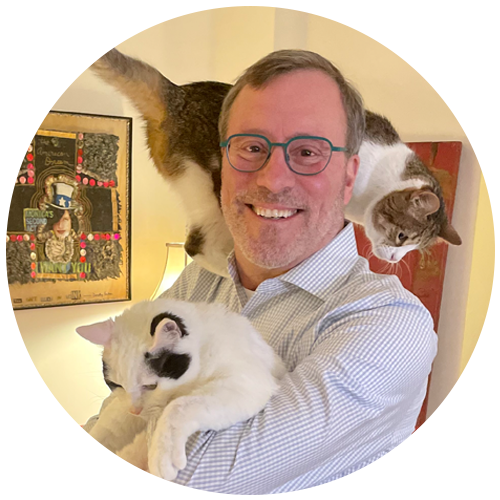
STEPHEN QUANDT: Stephen Quandt, CFTBS, FFCP is the founder of Stephen Quandt Feline Behavior Associates, LLC, and is a writer, author, public speaker and a certified Feline Training and Behavior Specialist and a Fear Free Certified Professional and the author of his children’s book, Happy Comes Home available on Amazon and Barnes and Noble. He has close to 25 years of experience working with cats in private consultations, animal shelters and in the field. He is the producer and resident feline behavior expert of The Shelter Cats Podcast and if you would like to read articles he’s quoted in or listen to more podcasts that he’s on see the media page on his website and more at catbehaviorhelp.com and across social media @catbehaviorhelp and on tiktok @cat_behavior_help.